
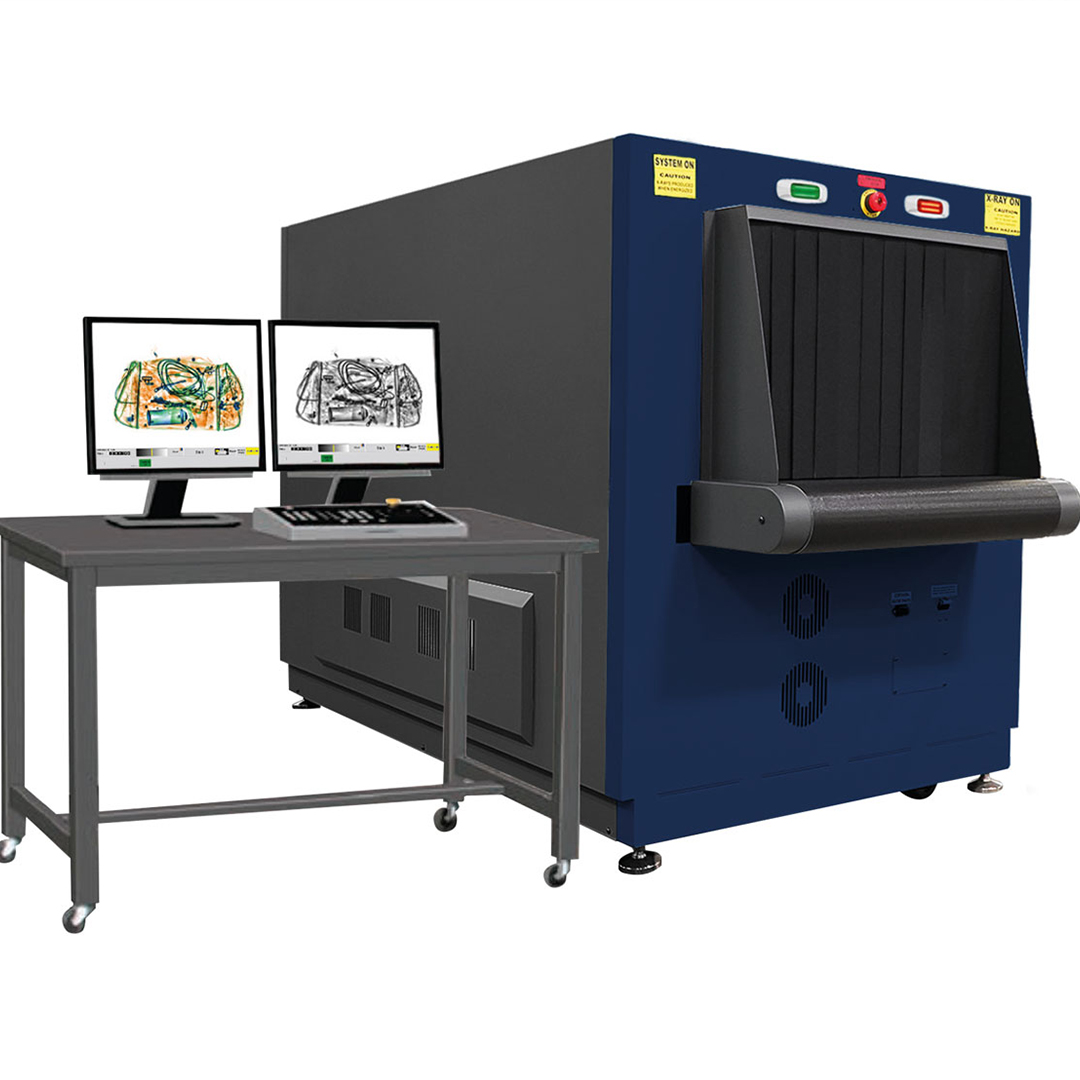

The X-Ray Baggage Scanning System is a vital security solution used to detect prohibited and hazardous items concealed within baggage, parcels, and cargo. These systems are essential in high-security areas such as airports, government buildings, transportation hubs, and commercial facilities.
X-ray scanning technology enables security personnel to inspect items without opening them, reducing manual search time and enhancing operational efficiency.
The system consists of different types of scanners designed for specific purposes, including mail & small parcel scanning, checkpoint scanning, large baggage scanning, cargo inspection, and mobile scanning solutions.
The Checkpoint X-Ray Scanning System is designed for high-traffic security screening at controlled entry points such as airports, train stations, stadiums, and government buildings. This system provides real-time, high-definition imaging to detect prohibited items in carry-on luggage.

allows operators to view baggage from different angles.

for quick identification of potential risks.

to improve threat detection efficiency.


The Large Baggage X-Ray Scanning System is designed for screening checked-in luggage, oversized suitcases, and heavy parcels. It is widely used in airports, train stations, and customs checkpoints to detect hidden threats.

for detailed scans of large luggage.


for improved object visualization.

for high-throughput screening.
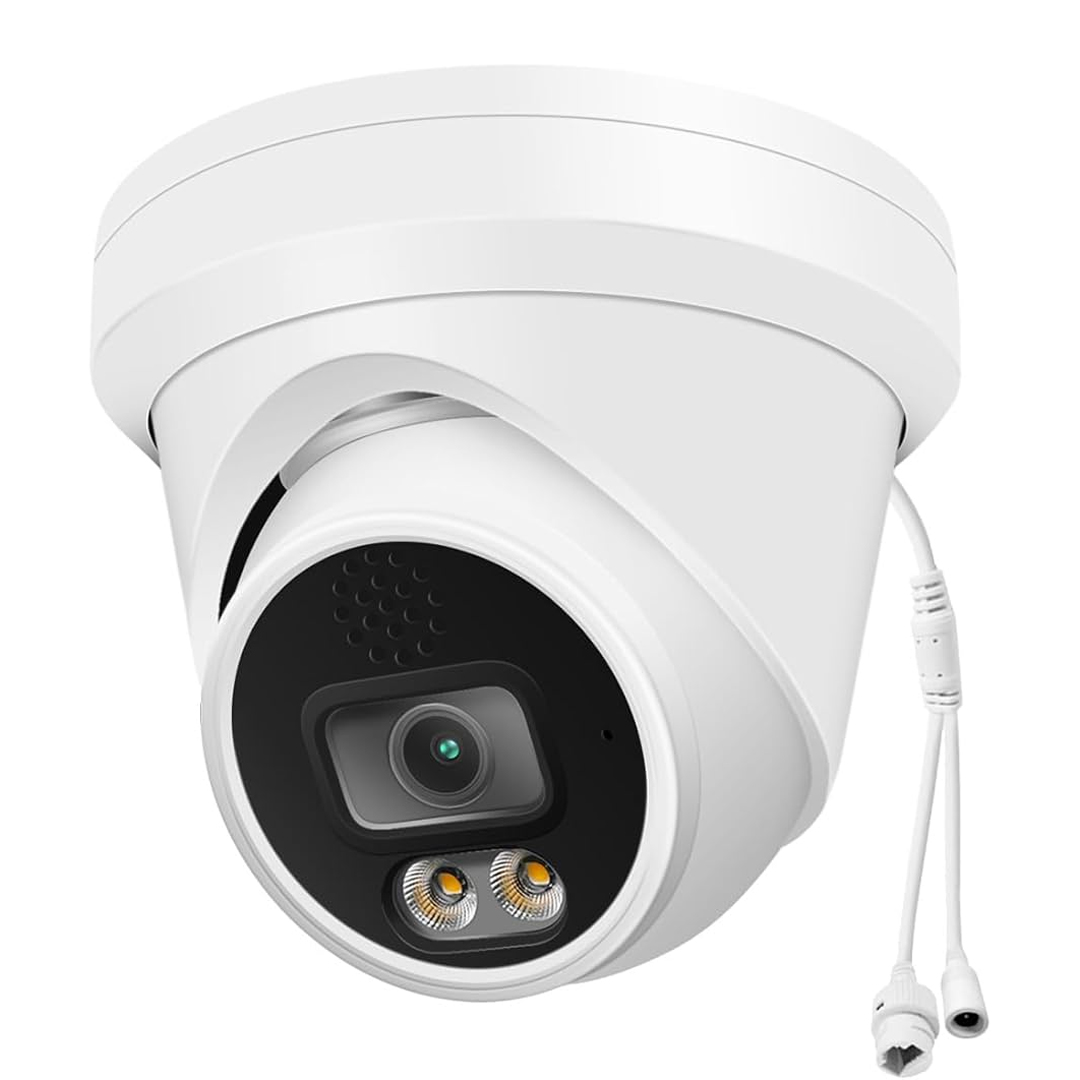
The camera records video footage in HD/MP quality and transmits it over a network to a Network Video Recorder (NVR). The fixed lens ensures a constant field of view, while the high-resolution capabilities allow for clear and detailed monitoring even at long distances.


Intelligent Video Analysis (IVA) refers to the software that processes video footage from IP cameras to extract meaningful data and provide automated monitoring capabilities. IVA uses algorithms and machine learning techniques to detect and analyze events such as motion detection, facial recognition, object tracking, and more, enabling more proactive surveillance management.

Automatically triggers recording or alerts when motion is detected in specific areas.

Identifies and matches faces to pre-stored databases.

Identifies and tracks objects, such as vehicles or people, within the camera's field of view.

Alerts security personnel when an unauthorized person or object crosses a predefined boundary.
IVA systems are integrated with IP cameras and use video feeds to detect specific events. Once the system identifies an event (such as motion), it automatically triggers an action, such as sending an alert to security personnel or activating recording. The software can also generate reports and provide insights for further analysis.

Reduces the need for manual monitoring by automating event detection and response.

Enables real-time alerts for suspicious activity, allowing for quicker responses.

Provides valuable data for analyzing trends, such as foot traffic or peak activity times.

Analyzing customer movement and behavior in stores.

Using facial recognition and intrusion detection for added security.

Monitoring access points and restricted areas with intelligent alerts.
A Network Video Recorder (NVR) is the heart of an IP surveillance system. It is used to record and store video footage captured by IP cameras. NVRs are network-based devices that can handle multiple IP camera streams simultaneously, offering a higher capacity for recording compared to traditional DVRs.

NVRs record video from IP cameras via a local area network (LAN) or wide-area network (WAN).

Provides remote access to live and recorded footage through web interfaces or mobile apps.

NVRs can support many IP cameras, allowing for expansion as surveillance needs grow.
The NVR captures video streams from connected IP cameras, encodes the footage, and stores it on internal hard drives or cloud storage. It allows operators to monitor real-time footage or playback stored videos from any network-connected device.

Offers scalable storage options for large amounts of video data.

Can handle multiple cameras simultaneously, making it ideal for large systems.

Allows for real-time monitoring and retrieval of footage from anywhere.

Centralized video management for large-scale surveillance.

Recording and managing high-security footage in sensitive areas.

Comprehensive surveillance with remote access for property managers and homeowners.