
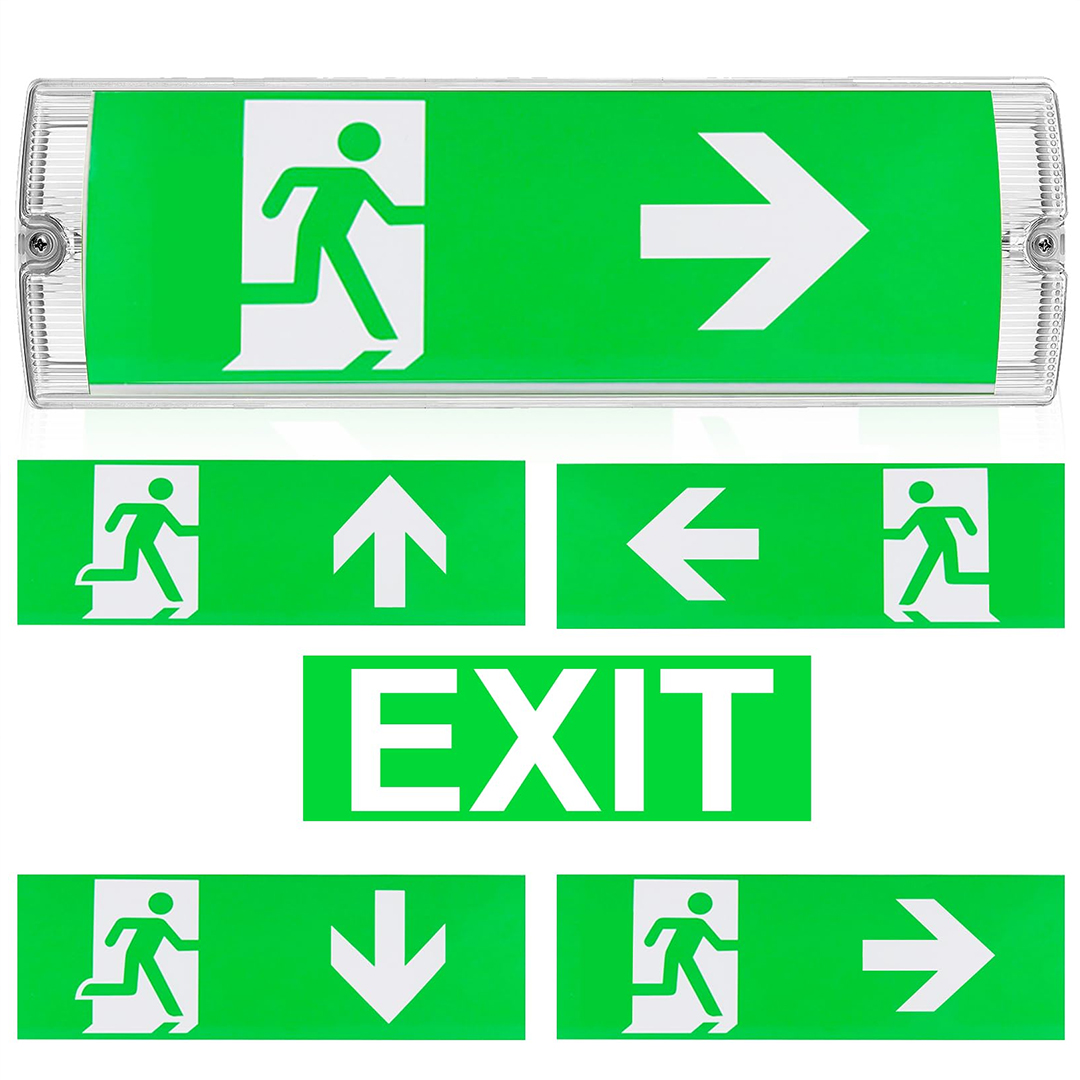

Emergency lighting systems are powered by backup power sources, such as batteries or generators, which are activated when there is a failure in the primary power supply.
LED lights are commonly used in emergency signs and lighting systems because of their energy efficiency, durability, and ability to provide bright, clear illumination.
Emergency signs with LEDs indicate escape routes, fire exits, or assembly points. These signs are designed to remain visible even in low-light or smoke-filled environments.
Emergency lights are equipped with sensors that automatically activate when the building's main power supply is disrupted, ensuring immediate illumination without human intervention.
LEDs are used because of their long lifespan, bright illumination, and low energy consumption.
When the building's main power fails, the emergency signs activate automatically, using backup power from batteries or a generator.
The signs are designed to be visible even when the normal lighting is unavailable or when there is smoke, ensuring that the building occupants can follow the escape route.
These systems maintain the integrity and safety of doors during emergencies, ensuring that doors remain operable when needed. They often rely on backup power or manual mechanisms to function properly during a crisis.
These devices are designed to automatically or manually open doors during emergencies. In some cases, they allow for access to restricted areas or facilitate the quick opening of fire doors to assist with safe evacuation. Door openers are often integrated with fire alarms and emergency lighting systems to trigger automatic opening during critical moments.
Emergency door openers typically have backup power systems (such as batteries) to ensure that they remain functional in case of power failure.
Many emergency door openers are automatically activated when fire alarms or evacuation alerts are triggered. This allows for the rapid opening of doors to create safe escape routes.
In some systems, there is a manual override option, allowing authorized personnel to open doors manually when necessary during non-emergency situations or if the automatic system fails.
These systems can be integrated with fire alarms, smoke detection systems, or emergency lighting. When an emergency occurs, they allow the doors to open automatically, providing a clear and safe path for occupants.
The primary function of emergency saving and door openers is to ensure the safety and security of building occupants during emergencies. By allowing fast and efficient access to exits, these systems significantly reduce the risk of injury or death during evacuations.
Building safety regulations often mandate the installation of emergency door openers and backup systems, especially in commercial, industrial, or public buildings. These systems ensure that the facility complies with local safety laws.
Emergency door openers are designed to cater to people with disabilities, ensuring that doors are easily opened by individuals with limited mobility, ensuring safe evacuation for all.
For smooth evacuation of employees during emergencies. Emergency saving and door opener systems ensure quick and safe exit.
In hospitals, these systems are crucial for safe and quick evacuation, especially in high-risk areas like ICU or surgery units.
Providing accessible and immediate evacuation routes for students, teachers, and staff members during emergencies.
For the safe evacuation of guests and staff in case of fire, earthquake, or any other emergency.
In malls and retail spaces, emergency door openers ensure that people can exit quickly during an evacuation, especially in crowded spaces.
These areas rely on quick access and evacuation paths, ensuring passengers and staff can evacuate safely.
In factories and industrial plants, where large machinery or hazardous materials might present additional risks during an emergency, door openers ensure immediate access to safe zones.