
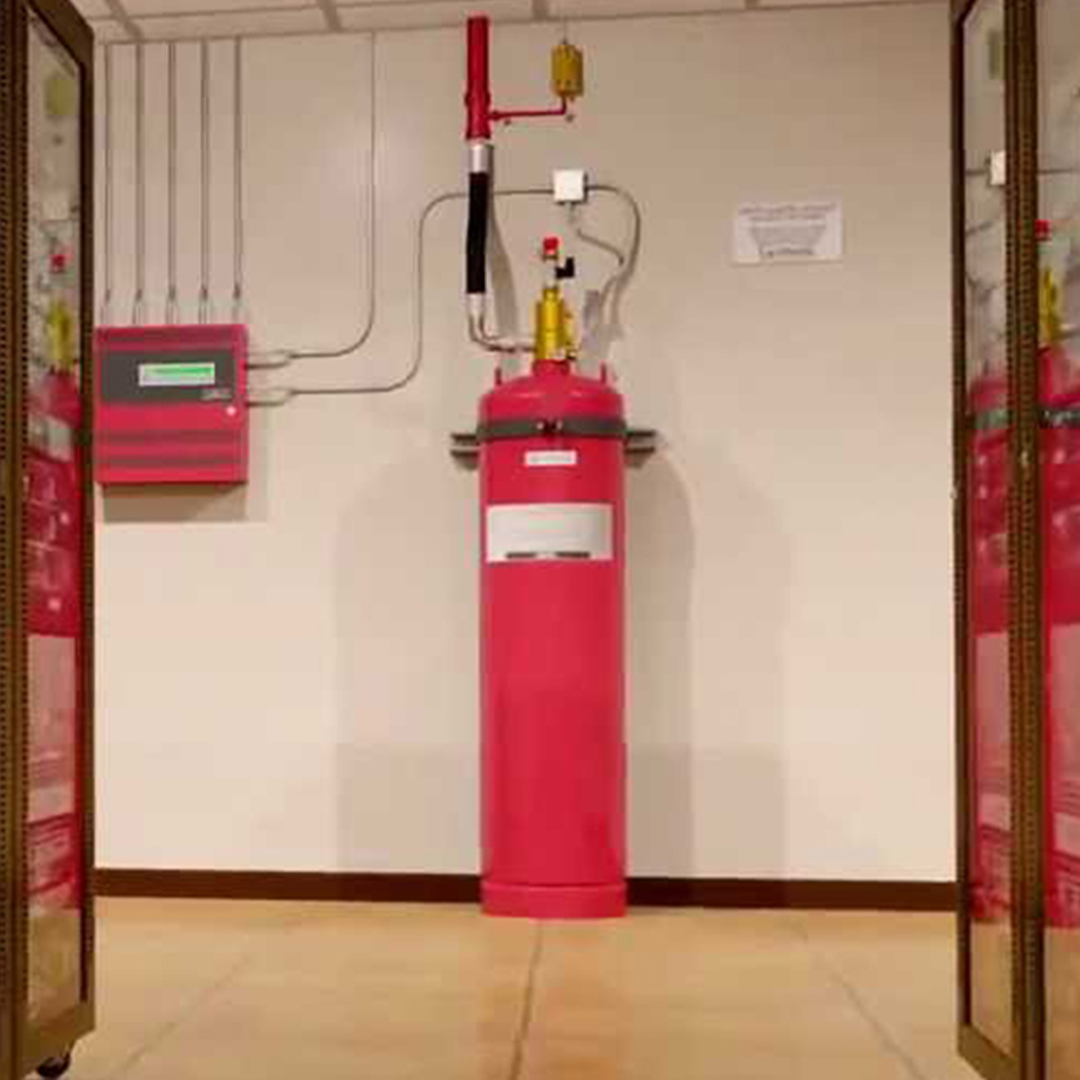
A Fire Suppression System is an advanced fire protection mechanism designed to detect and extinguish fires quickly while minimizing damage to property and loss of life. Unlike basic firefighting methods, suppression systems use specialized techniques, such as water sprinklers, chemical foams, and gas-based extinguishing agents, to suppress fires in their early stages. These systems are commonly found in commercial buildings, industrial sites, and high-risk areas where conventional fire-fighting methods may not be sufficient.
A fire suppression system operates through automatic detection and rapid response mechanisms. These systems use sensors, heat detectors, and pressurized delivery networks to extinguish fires before they spread. They work with different suppression agents, including water, foam, dry chemicals, or mist, depending on the type of fire risk involved.
Fire Detection: Sensors or alarms detect heat, smoke, or flames. Automatic or Manual Activation: The system activates automatically in response to a fire or can be triggered manually. Suppression Agent Discharge: Water, foam, or mist is released from nozzles or sprinklers to extinguish the fire. Fire Control & Damage Minimization: The system reduces heat and prevents the spread of flames until emergency personnel arrive.
Fire suppression systems play a vital role in reducing the severity of fires, protecting property, and ensuring compliance with fire safety regulations. These systems are crucial in preventing catastrophic damage in sensitive areas such as data centers, hospitals, and manufacturing plants.
Applicable Areas – Commercial buildings: Offices, shopping malls, hotels, Industrial facilities: Factories, chemical plants, oil refineries, Healthcare & Data Centers: Hospitals, IT infrastructure, research labs, Public & Transportation Hubs: Airports, railway stations, underground tunnels.
The aerosol system is one of the top fire suppression systems in Bangladesh which has the power to eradicate fire and its underlying damage to ensure absolute safety. The kitchen hood has built-in wet components that overcome the fire that arises during cooking. The components that help to protect from the kitchen will monitor, detect, and contain the fire at the earliest. An ISO certified fire and safety company managing and controlling fire with effective criteria and methodologies for complete protection. FM 200 system is one of the fastest fire suppression systems that limit further damage.
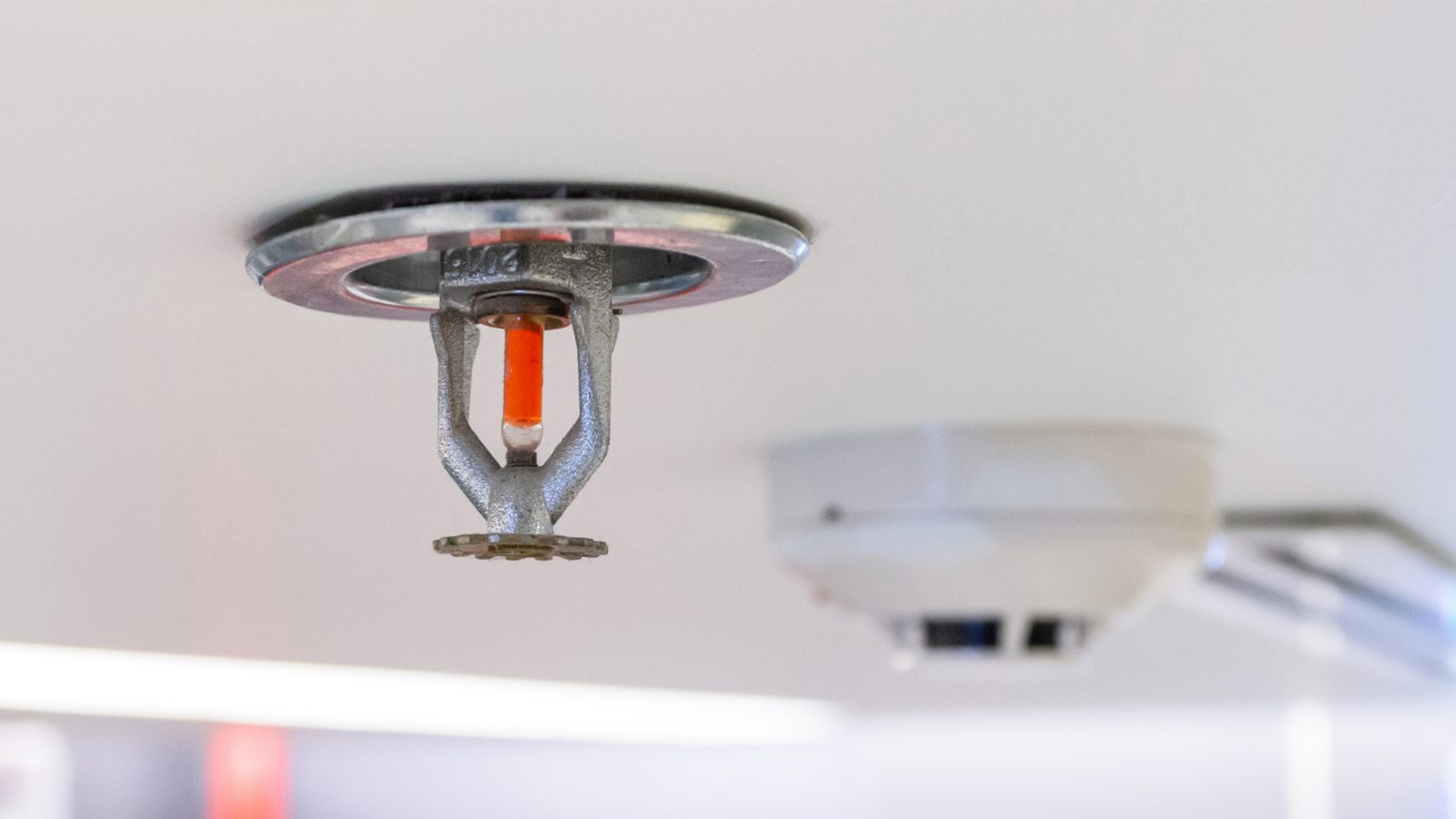
A Wet Pipe Sprinkler System is the most common type of fire suppression system, consisting of pipes filled with pressurized water. When a fire is detected, the sprinklers discharge water immediately, minimizing fire damage.
The system remains constantly charged with water under pressure, ensuring immediate water discharge when a sprinkler head is activated.
Heat Detection: Sprinkler heads have heat-sensitive elements that break at a specific temperature. Immediate Water Discharge: Once activated, water is released directly onto the fire. Fire Suppression & Cooling: The water cools the affected area and prevents fire from spreading.
Wet pipe sprinkler systems are highly reliable, cost-effective, and require minimal maintenance, making them suitable for buildings with a constant water supply.
Applicable Areas – Office buildings, Residential apartments, Schools and universities, Commercial and retail stores.
The aerosol system is one of the top fire suppression systems in Bangladesh which has the power to eradicate fire and its underlying damage to ensure absolute safety. The kitchen hood has built-in wet components that overcome the fire that arises during cooking. The components that help to protect from the kitchen will monitor, detect, and contain the fire at the earliest. An ISO certified fire and safety company managing and controlling fire with effective criteria and methodologies for complete protection. FM 200 system is one of the fastest fire suppression systems that limit further damage.
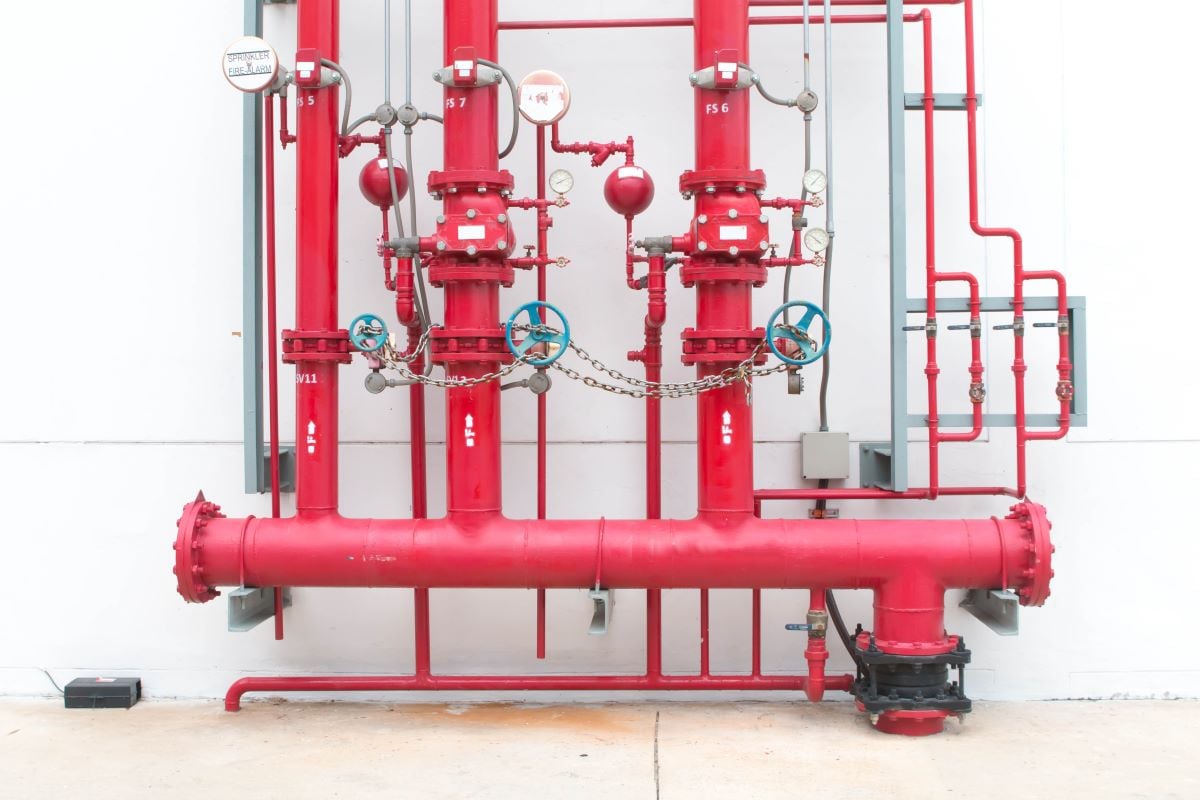
A Pre-Action Sprinkler System is a specialized type of fire suppression system designed to prevent accidental water discharge, making it ideal for locations where water damage must be minimized.
This system contains dry pipes that fill with water only when a fire is confirmed, reducing the risk of unnecessary water damage.
Fire Detection System Activation: Smoke or heat detectors signal a potential fire. Water Release into Pipes: The pre-action valve opens, allowing water into the system. Sprinkler Activation: Individual sprinkler heads open to discharge water over the fire.
This system is essential in areas where sensitive equipment or materials are present, as it ensures that water is only released when absolutely necessary.
Applicable Areas – Data centers, Museums and art galleries, Hospitals and laboratories, Libraries and archives.
Applicable Areas – Data centers, Museums and art galleries, Hospitals and laboratories, Libraries and archives.

A Foam Chemical System is designed to suppress fires by smothering flames with a thick foam layer. It is particularly effective against liquid-based fires such as oil, gasoline, and chemicals.
Foam fire suppression works by forming a barrier over flammable liquids, cutting off oxygen, and preventing re-ignition.
Fire Detection & Activation: The system activates when fire or heat sensors detect an emergency.
Foam Concentrate Mixing: Foam concentrate mixes with water and air to create an expanding foam solution.
Foam Discharge: The foam is sprayed over the burning surface, suffocating the fire.
Prevention of Re-Ignition: The foam forms a seal, preventing flammable vapors from escaping.
Applicable Areas – Oil refineries and fuel stations, Chemical plants and storage tanks, Aircraft hangars, Marine and offshore platforms.

A Water Mist System is an advanced fire suppression technology that uses fine water droplets to suppress fires effectively with minimal water usage. This system is highly effective in reducing heat and controlling smoke without causing water damage.
Water mist is created using high-pressure nozzles that break water into micron-sized droplets. These droplets absorb heat and displace oxygen, suffocating the fire.
Activation by Heat or Smoke Sensors: The system is triggered when a fire is detected.
Water Droplet Formation: High-pressure nozzles create mist that absorbs heat rapidly.
Oxygen Displacement & Fire Suppression: The mist reduces oxygen levels, suffocating the fire.
The water mist system is ideal for places where excessive water could cause significant damage, such as server rooms and electrical control centers.
Applicable Areas – Data centers and server rooms, Hospitals and healthcare facilities, Historical buildings and museums, Power plants and energy facilities.
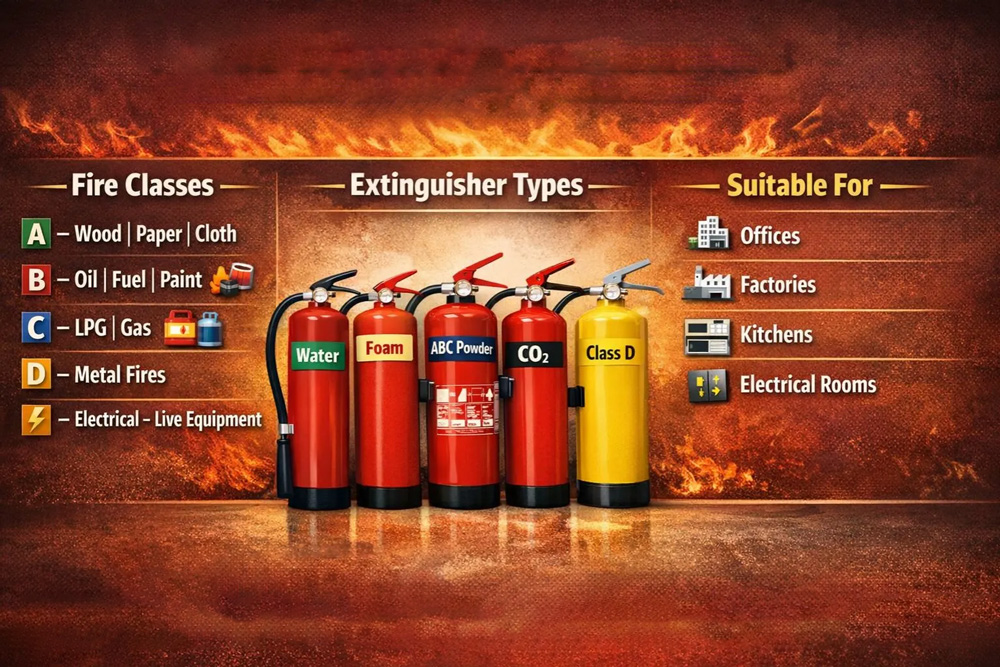
A Portable Fire Extinguisher is a handheld device used to suppress small fires before they spread. It is a crucial first-response tool in any fire emergency.
Portable fire extinguishers use different suppression agents like water, foam, CO₂, or dry powder, depending on the type of fire.
Identify Fire Type: Choose the correct extinguisher for the fire (Class A, B, C, D, or K).
Pull the Pin: Unlock the safety mechanism.
Aim, Squeeze, and Sweep: Direct the nozzle at the base of the fire and spray in a sweeping motion.
Fire Containment: The extinguishing agent suppresses the flames and prevents re-ignition.
Portable fire extinguishers are essential for rapid response, preventing small fires from becoming major disasters.
Applicable Areas – Offices and homes, Vehicles and transportation hubs, Industrial and commercial buildings, Schools and hospitals.